
SAT-7 HIGHLIGHTS CHURCH UNITY AND ENDURING FAITH DURING POPE’S MIDDLE EAST VISIT
SAT-7 CEO Rita El-Mounayer and SAT-7 Lebanon Executive Director Maroun Bou Rached accompanied Pope Leo XIV on his first official foreign visit, travelling to Türkiye and Lebanon as Vatican-accredited media.
They shared daily updates that illuminated the hope, endurance and witness of Christian communities within an area served daily by SAT-7, while SAT-7 TÜRK and SAT-7 ARABIC covered events from the ground. Throughout the visit, From 27 November to 2 December, SAT-7 amplified the voices, stories and resilience of believers living out their faith in challenging circumstances, highlighting its mission to make God’s love visible and to stand alongside Christians across the region.
TÜRKIYE: HERITAGE AND WITNESS
Pope Leo XIV began his visit in Türkiye, where meetings in Ankara highlighted the contribution of Christian minorities to the nation’s social fabric. “I willingly assure you that Christians desire to contribute positively to the unity of your country,” he said. “They are, and feel part of, Turkish identity.”
SAT-7 TÜRK documented worship at the Cathedral of the Holy Spirit, visits with pastoral workers, and encounters with communities “who carry the daily weight of ministry,” Rita reported. Coverage emphasised that the significance of the visit lay in the endurance of local believers who continue to serve faithfully in small and often overlooked congregations.
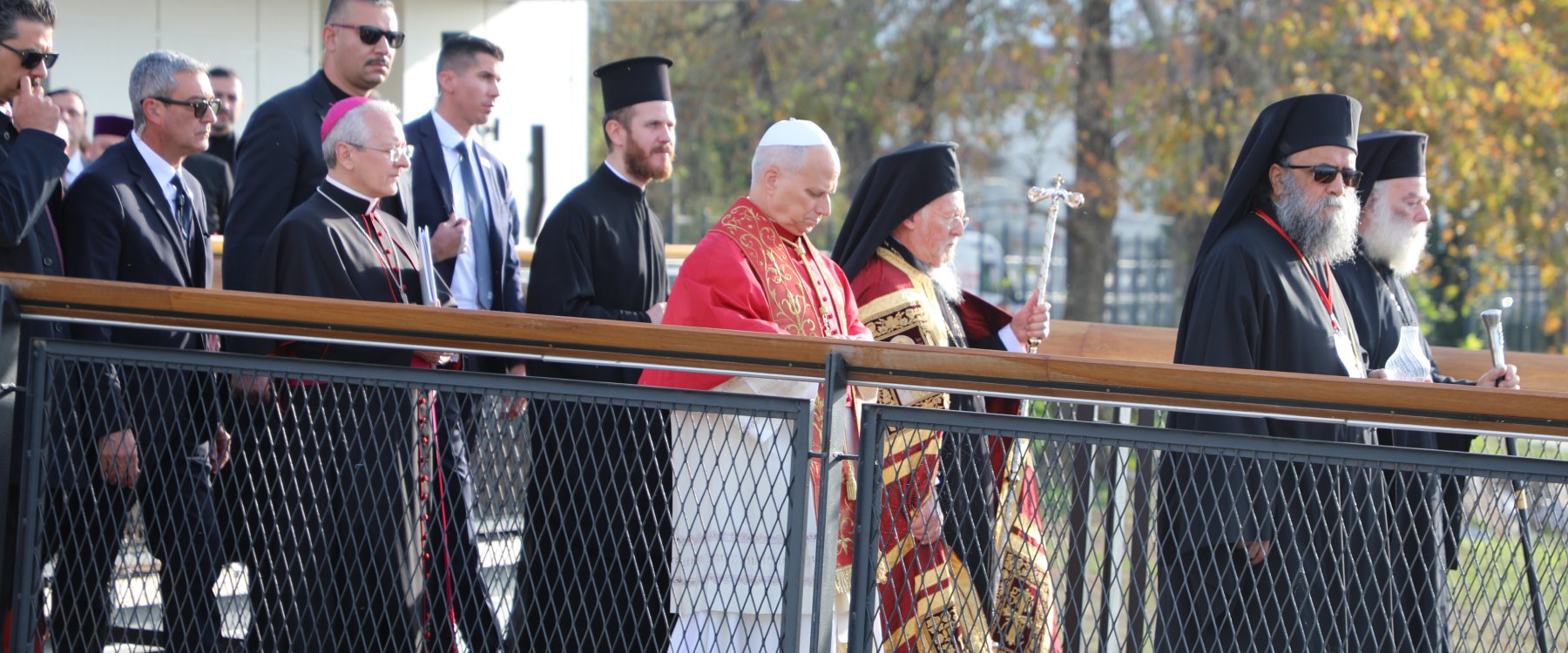
In İznik (ancient Nicaea), a prayer service was held near the archaeological remains of the Basilica of Saint Neophytos, marking 1,700 years since the Council of Nicaea.
SAT-7 highlighted this moment as a connection between ancient confession and present-day resilience: a continuity still shaping Christian witness in Türkiye. “To stand where the early Church declared its faith 1,700 years ago… reminded me that our roots are deep, older than any war or division we as Middle Eastern lived through,” said Rita.
At the site, Pope Leo reflected on the enduring significance of the Nicene Creed: “We return to this wellspring of Christian faith in order to move forward. The power of this place does not reside in what passes away, but in what endures forever.”
Returning to Istanbul, the visit turned toward ecumenical and interfaith cooperation. Rita described the Pope’s visit to the Sultan Ahmed Mosque, also known as the Blue Mosque, as “a gesture of respect, humility, and friendship toward the Muslim community.”
Later, a Joint Declaration signed with Ecumenical Patriarch Bartholomew I called for peace, dialogue, and collaboration at a time of global uncertainty. Reporting on the ground, Rita described it as “a symbolic bridge built in a world full of walls.”
LEBANON: PEACE AND HEALING
In Lebanon, SAT-7’s coverage focused on unity, resilience, and the theme “Blessed are the peacemakers.” Through its presence on the ground, SAT-7 ARABIC helped make that message visible: highlighting unity, strengthening hope, and amplifying the ongoing witness of local believers through challenging circumstances.
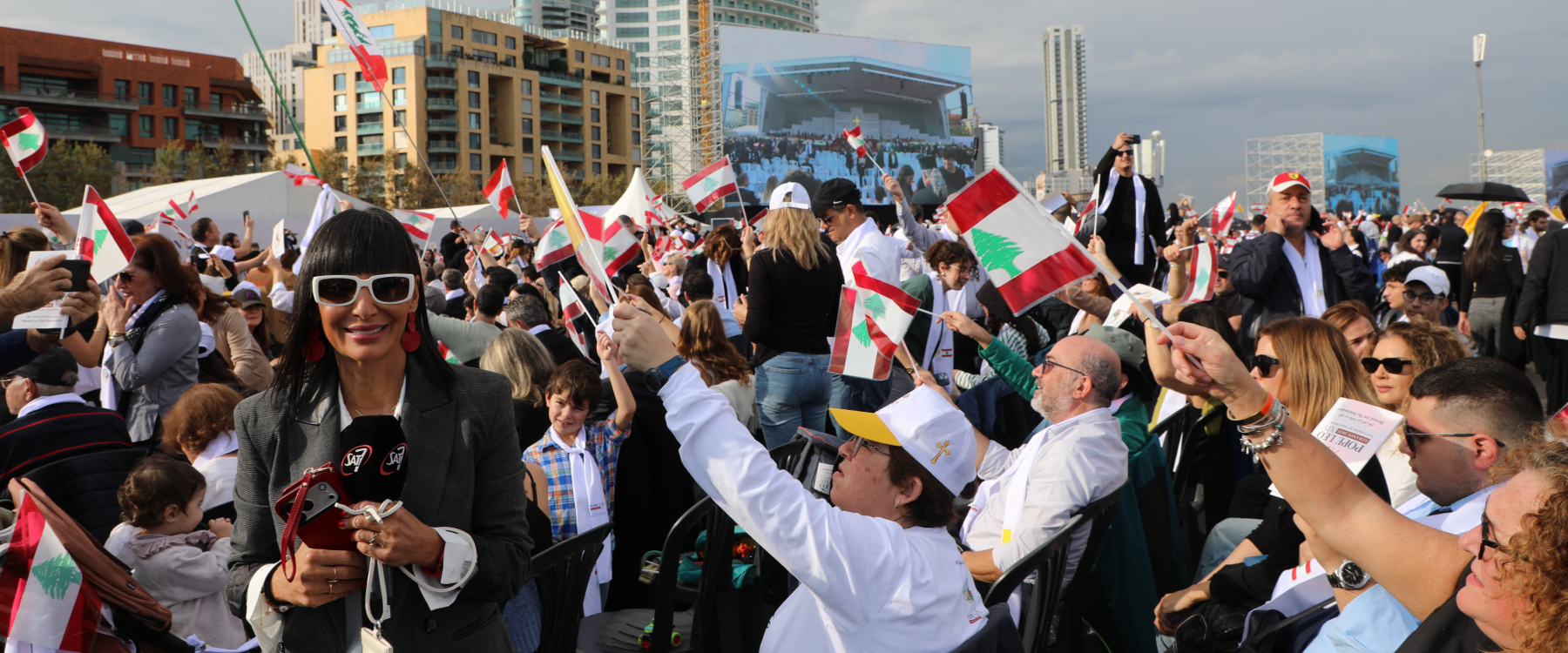
SAT-7 documented the Pope’s journey from Annaya to Harissa; meetings with priests, bishops, and consecrated men and women; and the gathering of Lebanon’s diverse Christian communities in Martyrs’ Square. Youth voices were also brought to the forefront. Ahead of the Pope’s meeting with young people in Bkerké, SAT-7 ARABIC’s You Are Not Alone spoke with organiser Dalia Abboud, who described the theme as “a call to positive action, a call to begin with ourselves and truly become makers of peace.”
The final day of the visit was quieter, yet marked by what Rita described as “a deep and unmistakable emotion.” At De La Croix Hospital, Pope Leo thanked “the caregivers who pour love into the hardest moments of life.” Later, he held a silent prayer at the port of Beirut, a place Rita suggested conveyed “a heavy silence, one that carried the memory of the 2020 explosion: lives lost, families broken, stories carved into the very stones of the city.”
The journey concluded with a Mass by the sea, thousands in attendance. Rita said the gathering pointed “from brokenness towards healing,” leaving behind “a message etched into the heart of Lebanon: healing is possible. Unity is possible.”
A SHARED MISSION
On the flight back to Rome, Rita was one of only six journalists chosen to ask Pope Leo a question. She asked: “What unique gift [does] the Church in the Middle East – with all its tears and wounds and challenges and past history – give to the Church in the West and the world?”
Pope Leo highlighted a lived witness shaped by compassion and unity. He stressed that “unity, friendship, human relationships, communion are extremely important and extremely valuable,” and added: “The more we can promote authentic unity and understanding, respect and human relationships of friendship and dialogue in the world, the greater possibility there is that we will put aside the arms of war… leave aside the distrust, the hatred, the animosity… and find ways to come together and be able to promote authentic peace and justice throughout the world.”
For SAT-7, this closing exchange underscored a core conviction: that visible unity and daily witness remain vital gifts the Middle Eastern Church offers to the world.
